
Environmental graphic design
Accessible environmental graphic design, guided by AODA and building codes, ensures inclusive navigation and exhibition experiences. Effective wayfinding systems utilize spatial cues, signage, and design to build user confidence, orientation, and accessibility.

Accessible spaces
Environmental graphic design provides people with information in a physical space. This information can be categorized in two ways: wayfinding and exhibition. Wayfinding information helps people orient themselves and navigate within a physical space. Exhibition and interpretive signage communicate an idea or tell a story to the audience. In either case, this requires a wide range of considerations including human ergonomics, accessibility standards, building codes, and safety requirements. Accessible environmental graphic design accommodates the diverse needs of people with sensory and cognitive impairments, as well as physical motor limitations.
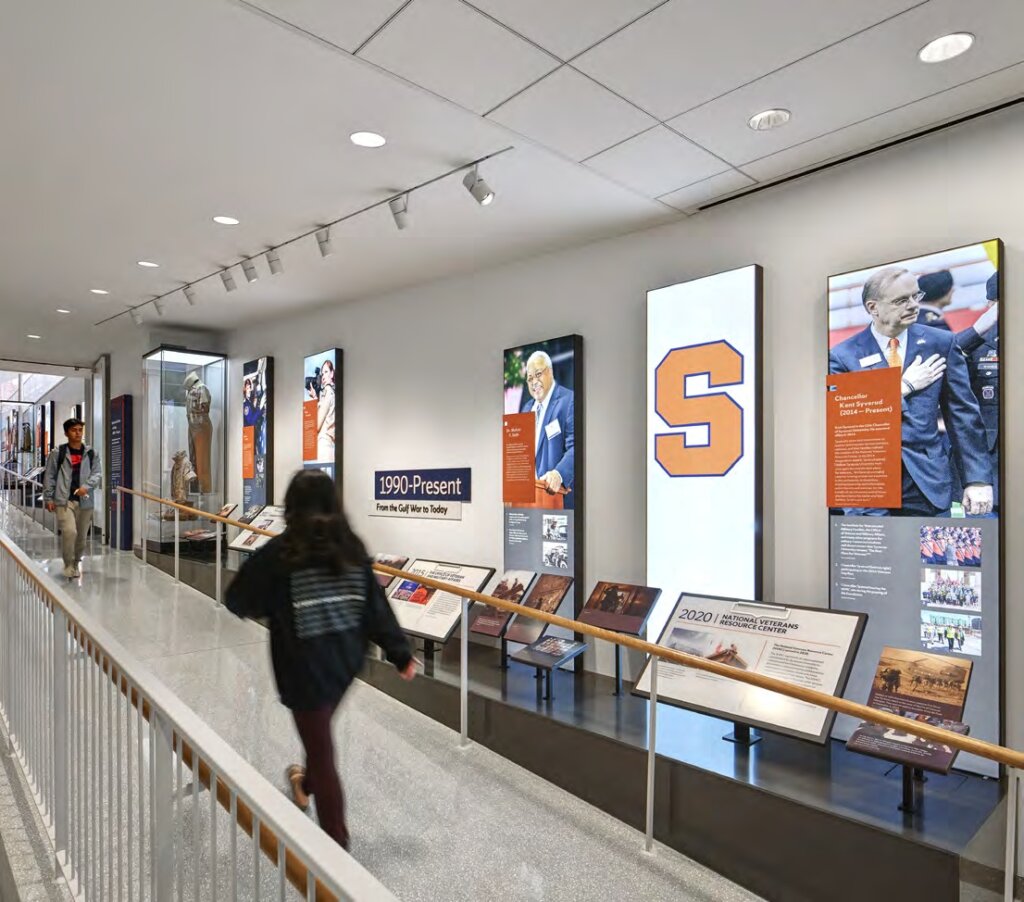
Accessible environmental graphic design accommodates the diverse needs of people with sensory and cognitive impairments, as well as physical motor limitations.
The AODA establishes certain requirements for accessible environmental graphic design. These standards are articulated in the Integrated Accessibility Standards, which are a Regulation under the Act. Of the five areas addressed by the standards, two are particularly relevant to environmental graphic design.
- Transportation Standards provides requirements for public transit signage.
- Design of Public Spaces Standards provides requirements for outside a building.
In addition to the Integrated Accessibility Standards under the AODA, designers are required to follow the Ontario Building Code, or the building code that governs the project’s jurisdiction.
These standards leave some gaps in guidance for accessible design. This book supplements those gaps with information from the Americans with Disabilities Act (ADA), the Canada Science and Technology Museums Accessibility Standards for Exhibitions, and the Smithsonian Guidelines for Accessible Exhibition Design.
Wayfinding systems
Nobody likes feeling lost. A comprehensive wayfinding plan does more than help people find their way. It helps build confidence and trust with the users of the system.
To create an effective wayfinding plan, begin by conducting a thorough analysis of the existing or proposed physical environment. Identify and assess a full range of anticipated needs, problems and opportunities. Create a comprehensive plan detailing all the techniques and tools that can be deployed in the space so that people can orient and direct themselves.
Spatial wayfinding
Spatial wayfinding is a method by which people make route decisions to get to their destination without the assistance of directional signs. This is how we typically travel through familiar spaces, as we form mental maps of the environment using familiar landmarks in order to orient ourselves.
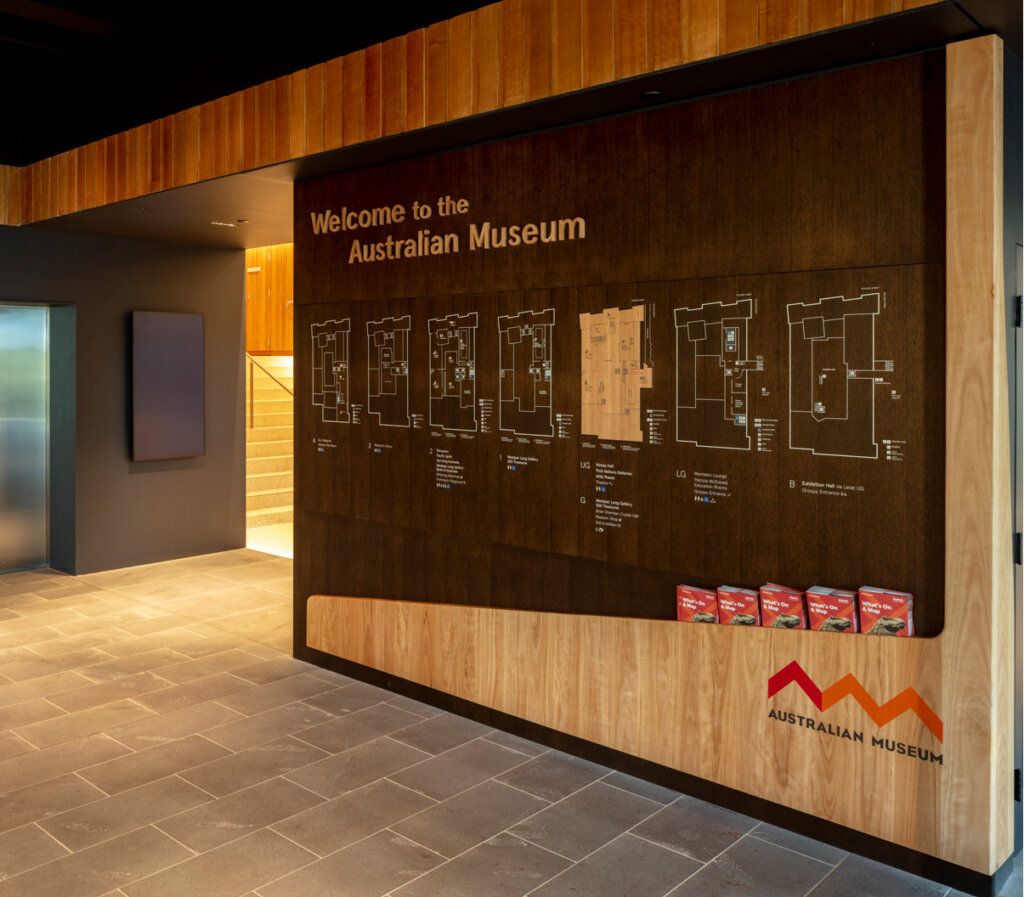
Within large sprawling facilities it can be difficult for users, especially infrequent ones, to develop a strong spatial orientation. To assist with this process, architects and designers purposely create distinctive landmarks, such as facades, gateways, images, landscaping, lighting, pathways, sculpture, with distinctive patterns and material usage. They also establish defined routes through a facility, and support them with directory maps. All of these elements and features help people orient themselves to their environment.
Linear wayfinding
Linear wayfinding is a method by which people follow a series of directional signs in order to get to their destination. As the name suggests, it is a linear design system, and each message is dependent on what came before. It differs from simply following a list of directions as linear wayfinding directions are not grouped together, but spaced out along a route with strategically placed signs. Airports are often highly reliant on linear wayfinding systems.
An effective linear wayfinding system must be complete, accurate, understandable, and consistently applied.
Signage must use commonly understood terminology, and all information must be kept current. While too many signs can create unwanted clutter, it is better that any linear pathway should err on the side of thoroughness. Furthermore, the amount of information presented on a single sign must be adequate, without overwhelming the user. A sign with too many destinations and arrows pointing in many directions increases cognitive load.
Visitors must be able to quickly find the information they need, and then easily follow that information to their intended destination.
Signage design
The accessible design and typography considerations detailed in this book are an essential part of signage design. Building on this, accessible signage design must also consider materials, placement, viewing distance, and technological enhancements.
Accessibility guidelines generally classify wayfinding signage into two categories: directional signs, and identification signs. The specific standards for these types of signage can vary considerably by jurisdiction. The following guidelines are based on some of the most common recommendations.