
Entro
Syracuse University Signage, Wayfinding, Exhibit
Client: Syracuse Unversity
Summary
The NVRC exhibit highlights Syracuse University’s history of veteran support through photos, artifacts and tactile displays. Accessibility is prioritized with braille, tactile signage, clear visuals and universal design features like wide ramps.
Context
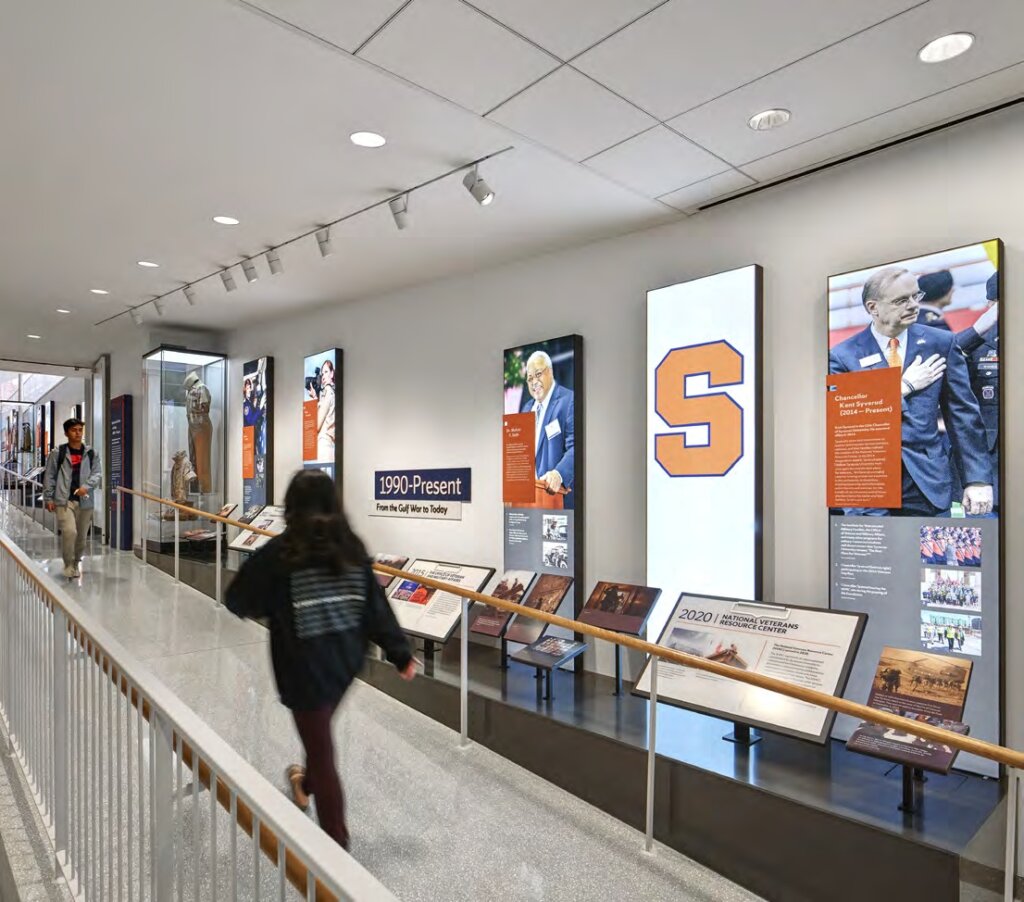
The National Veteran Resource Centre (NVRC) exhibit promotes diversity and inclusion in terms of content and accessibility; it celebrates a diverse range of veterans from past to present, to reflect the community. The Hall of Honor exhibit populates the length of the ramp, showcasing key veterans and events that connect to the University of Syracuse, reflect its diversity, and shape its community and polices. The University’s history of supporting veterans dates back to WWI and is notable after WWII with Syracuse waiving admission requirements and providing supportive housing, teaching and service facilities for returning veterans pursuing degrees on the GI Bill.
We planned and designed the exhibit to incorporate four zones on the ramp’s landings. These include WWI; WWII; Korea, Vietnam, and the Cold War; and then the Gulf War to the present day. The University’s rich collection of photographs forms the foundation of this exhibit, which is supplemented by personal artifacts from veterans and their families affiliated with the NVRC. Touchable reproductions combine with narratives and tactile interpretive panels bring historic personalities and events to life.
Design process
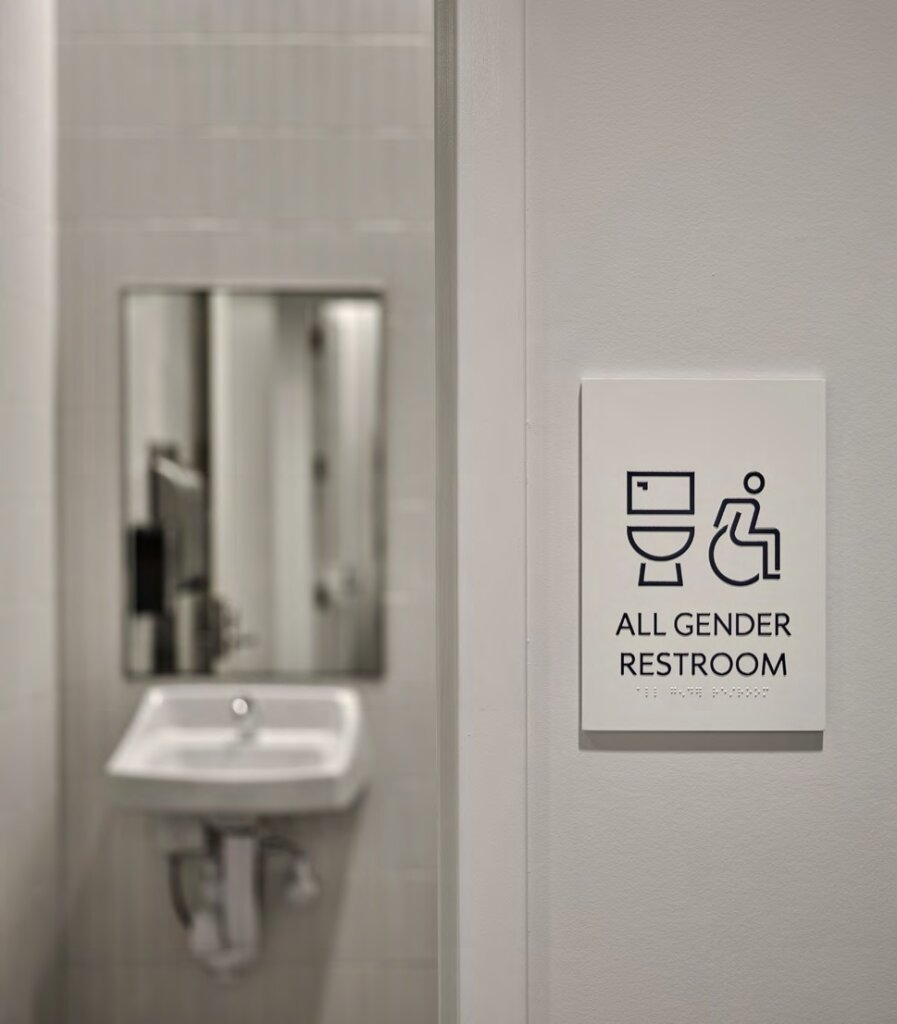
In addition to designing statuary signage to identify accessible and ambulant toilets within the spaces, our team provided tactile and braille signage throughout the visitor’s journey for visually impaired visitors:
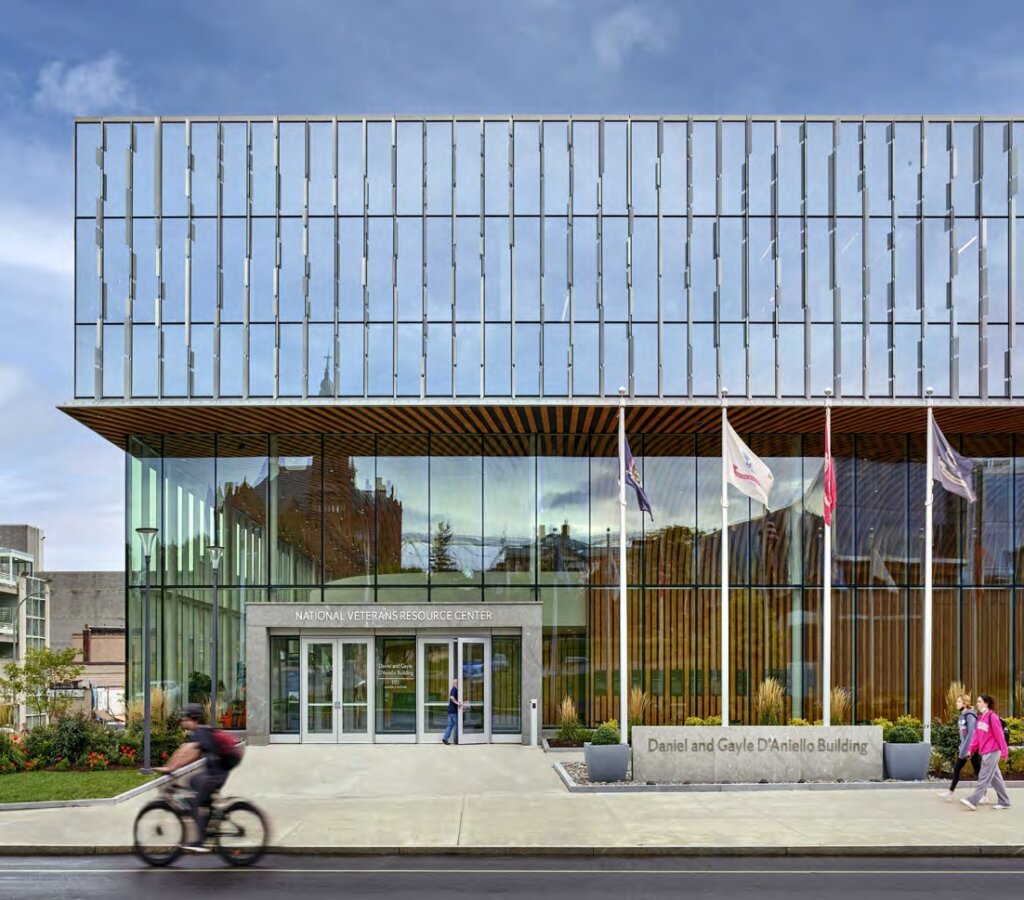
- Exterior tactile signage, including a tactile map provides directions and identifies entrances.
- Interior tactile signage provides directions to and along accessible ramps.
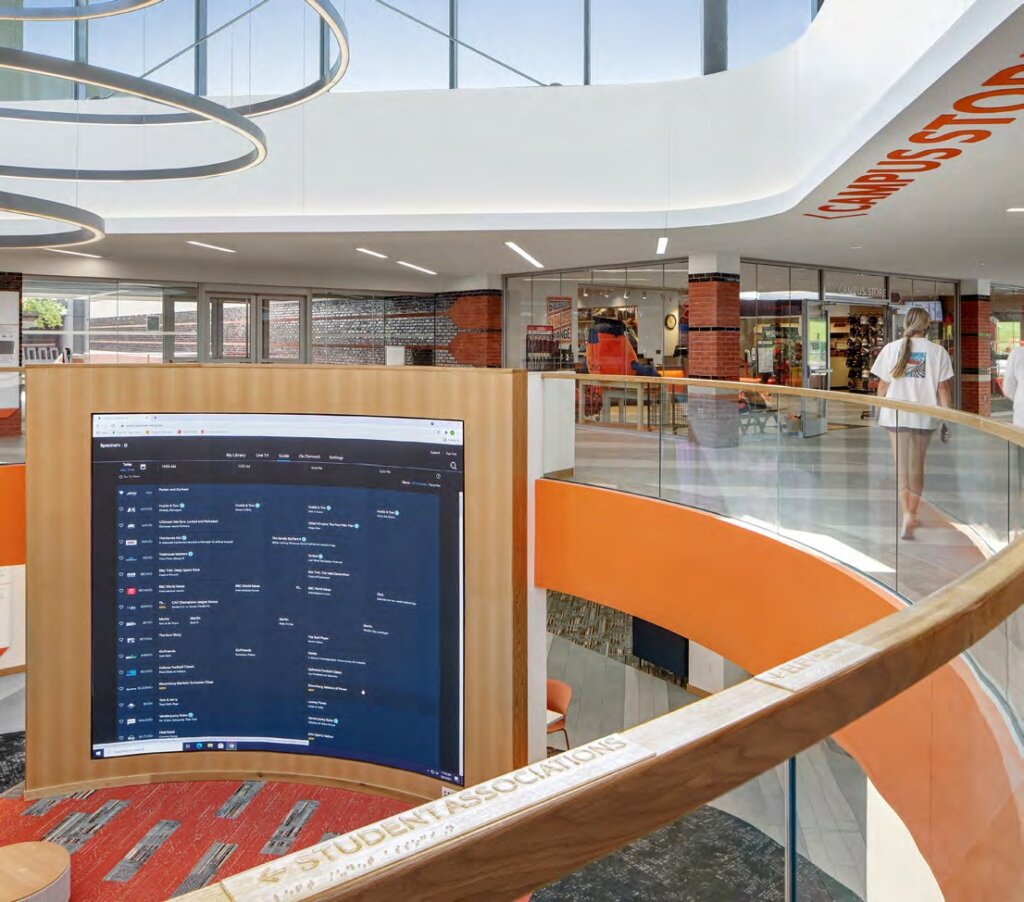
- Tactile messages were added to elevators to describe points-of-interest and destinations on each floor.
- The NVRC exhibit features touchable reproductions combine with narratives and tactile interpretive panels bring historic personalities and events to life
For visually able visitors, we ensured signage was clear and accessible by adopting the following strategies:
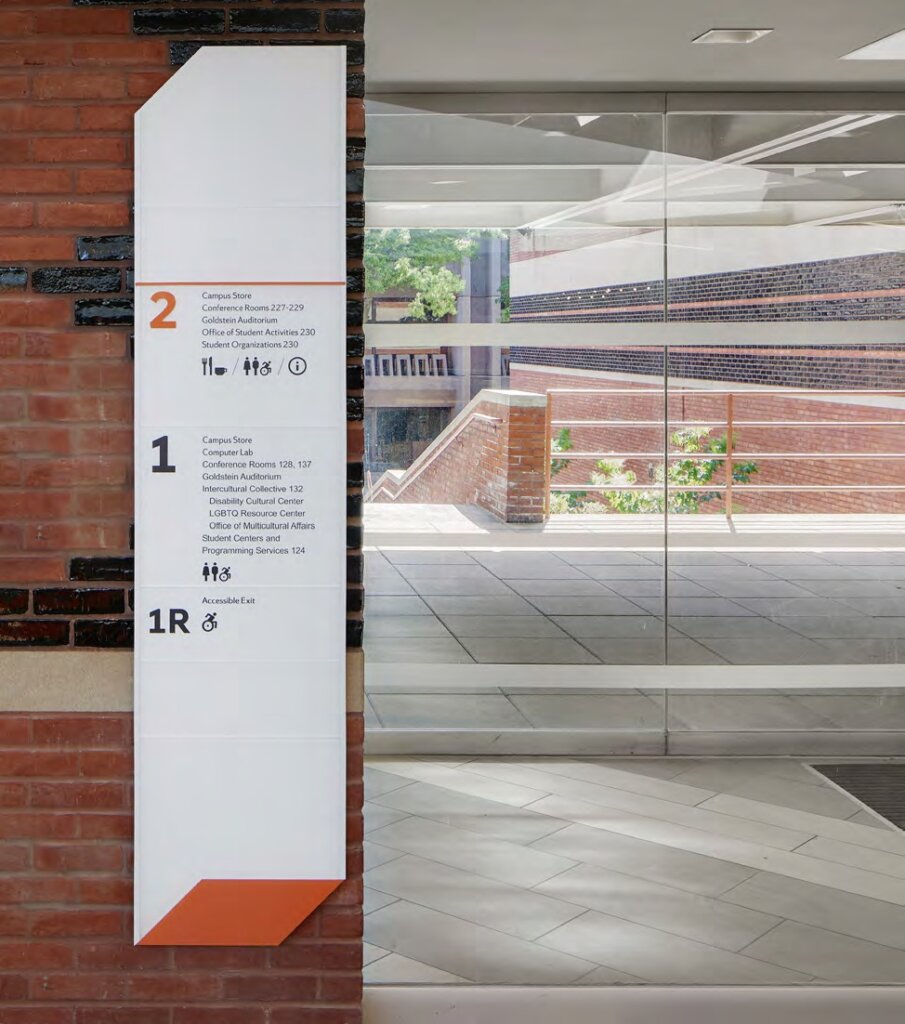
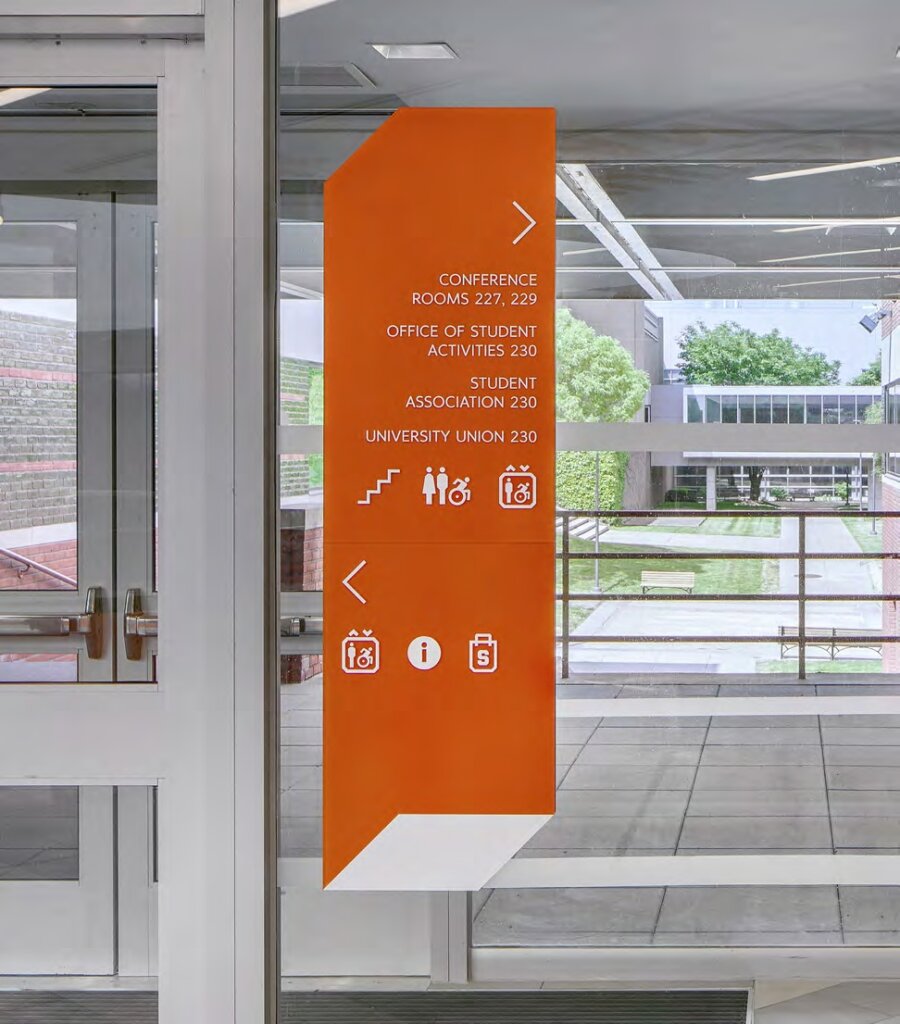
- Whenever possible pictograms are used instead of written messages to engage the diverse audience.
- Text sizes were determined based on reading distance, mounting height, and industry best practice.
- Signs locations are consistent from floor to floor, allowing users to build confidence in self-navigation
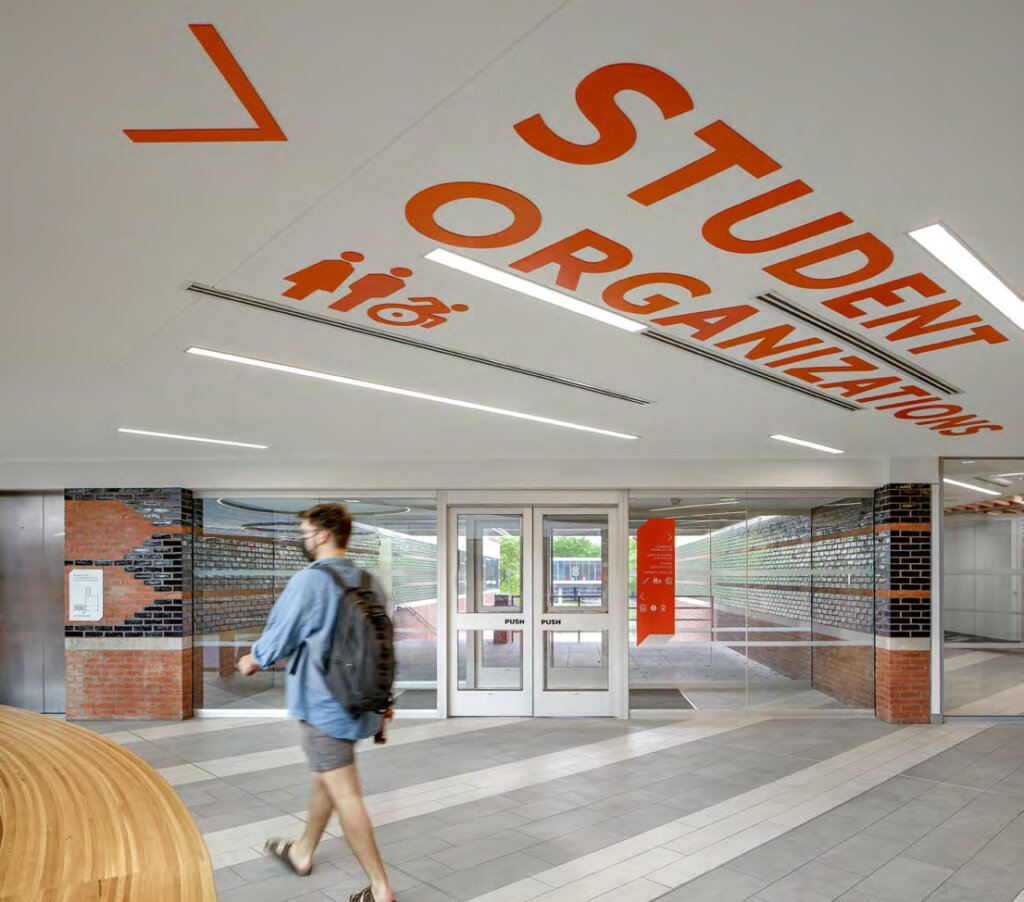
- In the Schine Center, the central hub features large-scale ceiling graphics, visible from every floor, pointing the way to key destinations.
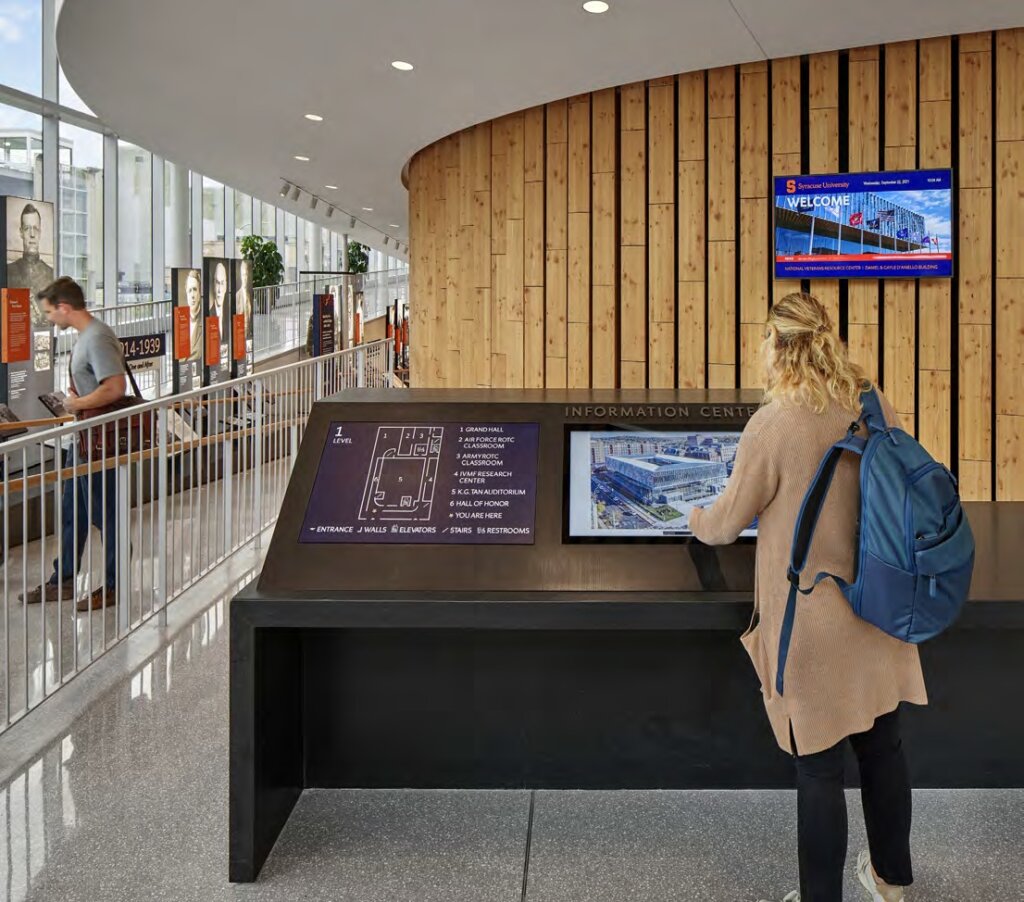
- In the Schine Centre, hard-to-understand alphabetical floor numbering was replaced by large, numeric level indicators accompanied by clear directories.
Solution
In order to apply tactile and braille to sign surfaces and handrails, the latest technology in 3D printing was utilized.
Does the project reflect the principles of diversity and inclusion? If so, explain.
The NVRC serves a diverse range of users as it cultivates innovative academic, government, and community collaborations and aims to advance the social, economic, and wellness concerns of US veterans and their families.
Veterans themselves are a diverse group, ranging widely in age, ethnicity, and ability. Many have been injured during their service, both physically and psychologically, and so accessibility and the application of universal design principles was crucial to the success of the space. Wide, gently sloping ramps down to the lower level and up to the auditorium balcony are key to the architectural layout rather than an add-on requirement.
To address these diverse groups, we made efforts to ensure sign messaging was as visually legible as possible through careful choice of typeface, size, simplified nomenclature, layout, colour, and placement. Wherever possible, custom pictograms representing a range of destinations, services, and amenities, were applied in an effort to improve visibility and address language barriers. Tactile messaging, including tactile maps, and braille is used throughout the signage program, on handrails, and throughout the NVRC exhibit’s touchable reproductions and tactile interpretive panels.
The Schine Centre serves as more of an all-purpose student centre for the University. The design team prioritized the principles of universal design and student-centred design to create a space that celebrates the diverse and inclusive atmosphere of a building that houses the University’s Office of Multicultural Affairs, the Disability Cultural Center, and the LGBTQ Resource Center in a new Intercultural Collective space. We wanted to develop a program that reflected this spirit and to meet the needs of the students, who wanted an environment that is “authentic, inviting, connective, and varied.”