
Forge Media + Design
A safe place for all youth
Client: Stella’s Place
Credits: Project Manager: Vian Musa, Discovery and Research: Keith Francis, Principal Designer: Jesse Pope, Designer: Noha Della Polla
Summary
Stella’s Place created an accessible, community-driven mental health facility for youth, emphasizing inclusive design, co-creation, wayfinding and cultural representation to foster well-being, belonging and holistic support experiences.
Context
Stella’s Place serves young adults with mental health needs in the Greater Toronto Area, providing free mental health services to individuals aged 16 to 29. Each year, Stella’s Place supports over 1,500 young adults.
The organization offers a comprehensive range of programs, including peer support, clinical services, employment support, wellness initiatives, art therapy and recovery programs. These services help young adults acquire skills, build community and feel empowered to manage their mental health.
Stella’s Place acquired a three-storey building measuring 11,222 square feet at 54 Wolseley Street, which now serves as its permanent home. The building was designed in collaboration with Stantec Architects. This distinctive space features the signature Stella’s Café—a drop-in hub where youth can connect with peers on similar mental health journeys and learn about available support services including individual and group counselling spaces as well as an innovative peer support training hub.
In collaboration with Stantec Architects, Forge Media + Design was responsible for designing, developing and implementing a comprehensive wayfinding and donor recognition plan. This plan emphasizes accessibility and is centred around participant and donor experiences for the expanded facility at 54 Wolseley Street.
The new building was designed to comply with the Accessibility for Ontarians with Disabilities Act (AODA), with consideration for a naming plan approved by the Board of Directors, this plan includes donor recognition opportunities for major contributors through the naming of spaces within the facility.
Design process
Our approach to fulfilling the mandate centres around the primary goal of accessibility, while also aiming to achieve the following:
- Enhancing the mission, vision and values of Stella’s Place in the design approach
- Integrating various elements of holistic design to support effective placemaking
- Creating a living space that promotes well-being
- Designing an environment that reflects individuals’ lived experiences, personal identity and cultural background
- Fostering a spirit of community through thoughtful design
Solution
Forge Media + Design employed a co-design (CD) and participatory design (PD) approach as a research methodology to capture the essence of Stella’s Place, including its mission, vision and values. This approach emphasized the desire for an inclusive space.
The discovery charrette involved carefully crafted questions and visual metaphors that helped uncover the motivating human factors and experiences that informed the design of Stella’s Place, illustrating a journey narrative for the space.
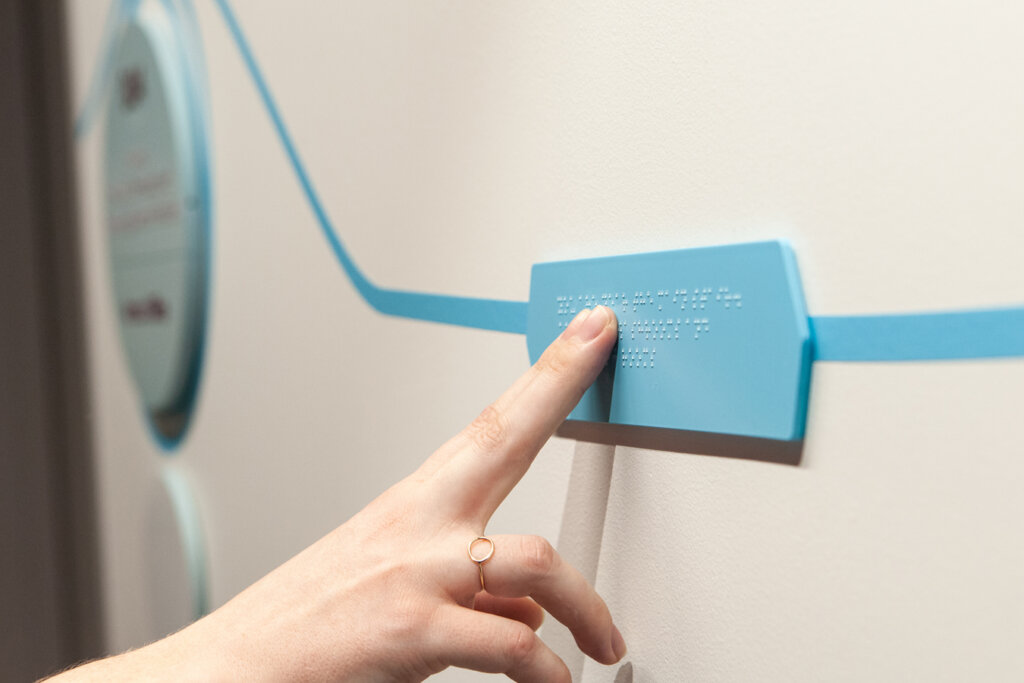
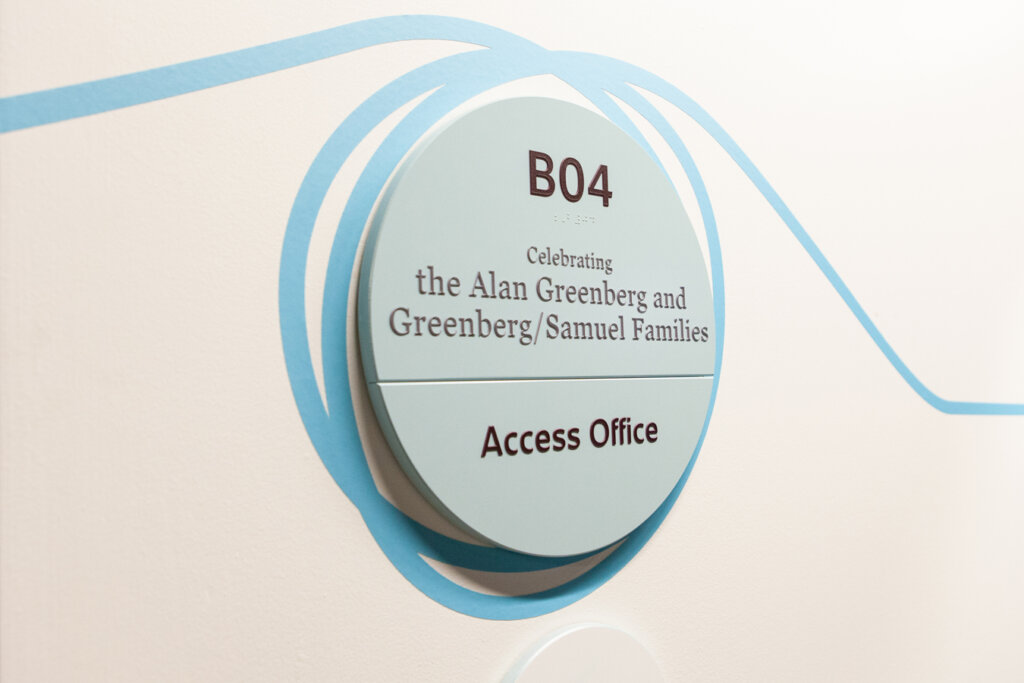
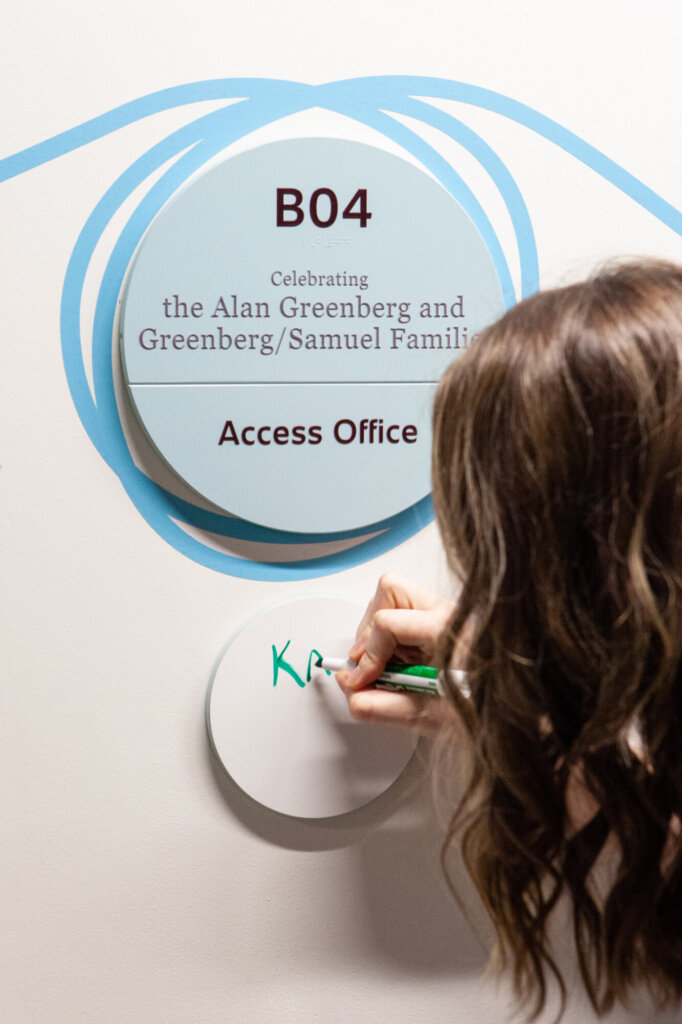
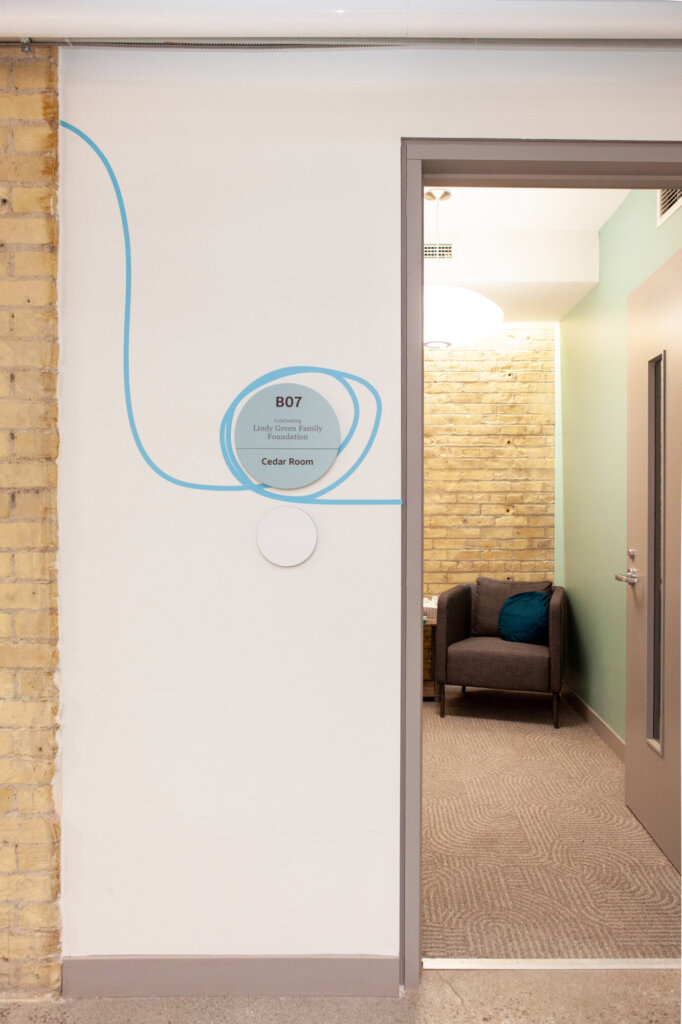
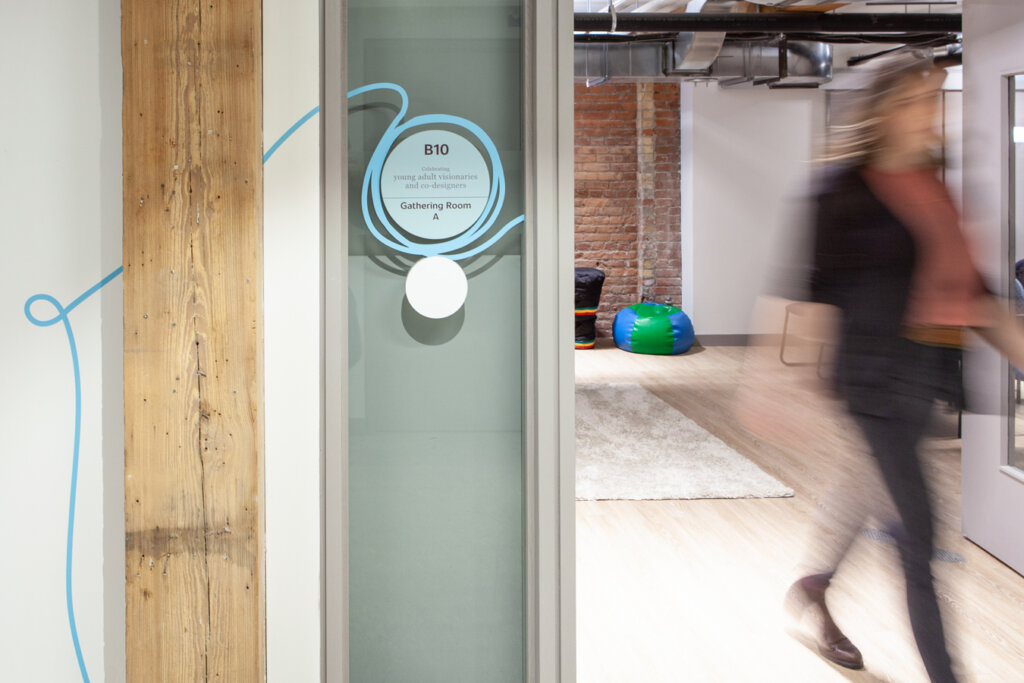
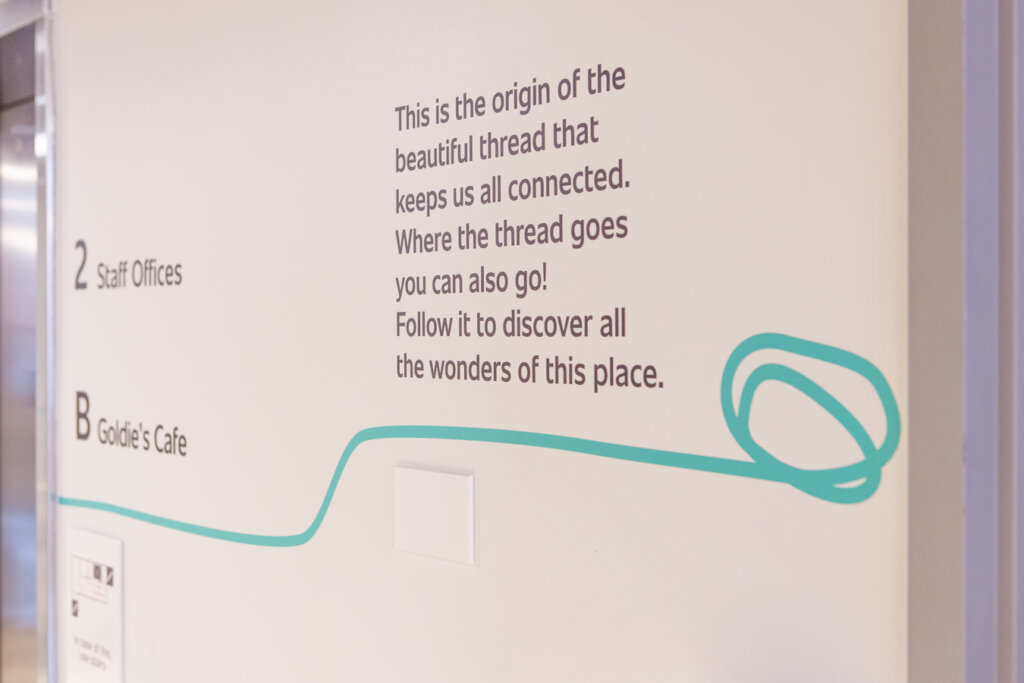
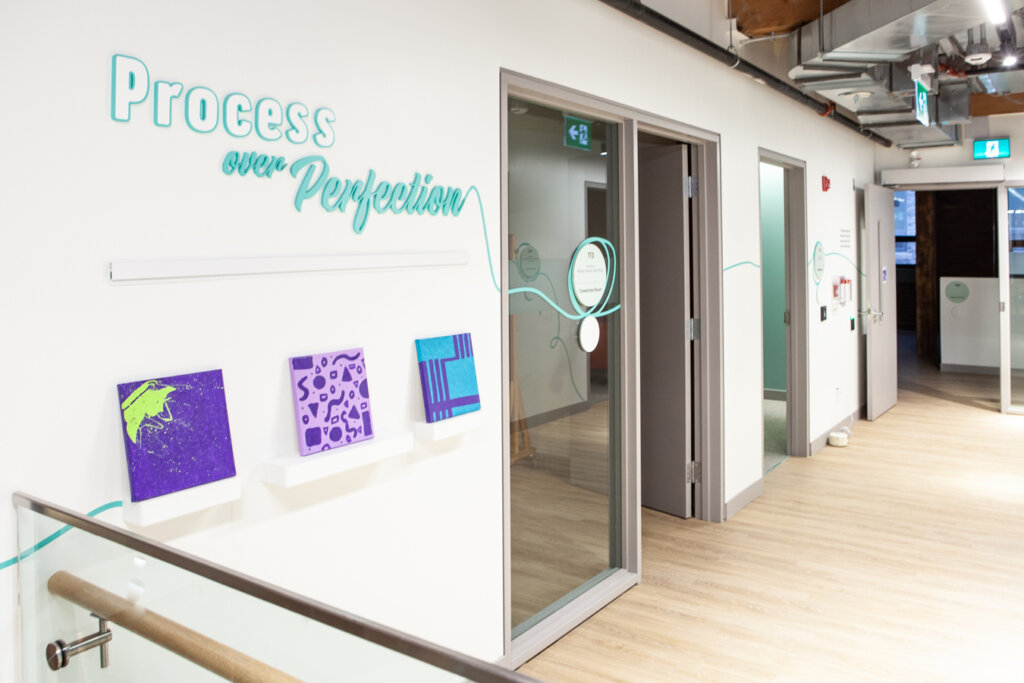
Themes from the charrette were represented as a colourful thread graphically woven throughout the area, intuitively delineating spaces that youth participants are encouraged to use. Every detail of the signage prioritizes participant safety and includes a high level of adaptability to accommodate the various services provided.
At the heart of the building, the digital donor wall highlights the significance of those who contribute funding, services and participation. By pushing a button, viewers can watch video testimonials from donors, participants, peers and staff, capturing the essence of “Why Stella’s Place matters” and illustrating the strong sense of belonging shared by everyone who walks through its doors.
Which fundamentals of accessible design were considered?
With accessibility in mind, our design approach to wayfinding, signage and donor recognition applied a holistic approach to mobility, circulation planning and journey narratives illustrating space and place based on the following:
- AODA-compatible wayfinding (i.e. braille, audio, etc.)
- Mobility, circulation planning and journey narratives for public spaces (café, reception, kitchen), clinical spaces (such as counselling spaces), the donor wall (physical or digital) and COVID-19 protocols as per Toronto Public Health guidelines, with objects and elements designed to withstand appropriate COVID-grade cleaning products
- Socio-spatially sensitive and intuitive to dwelling, free wayfaring and reflective nodes
- Authentically representational to culture, community, lived experience and place persona (who we are and what we represent as Stella’s Place)
- Object design emotionally reciprocal and active in curating space and place and its effect on health and well-being
Does the project reflect the principles of diversity and inclusion? If so, explain.
Yes. As outlined in the Solution section, this project inherently reflects diversity and inclusion through its emphasis on accessibility and participatory design.